Κατηγορία: Ταξίδια

  • Vathy, Samos: A Heritage Walk Through the Island Capital

    Vathy, Samos: A Heritage Walk Through the Island Capital

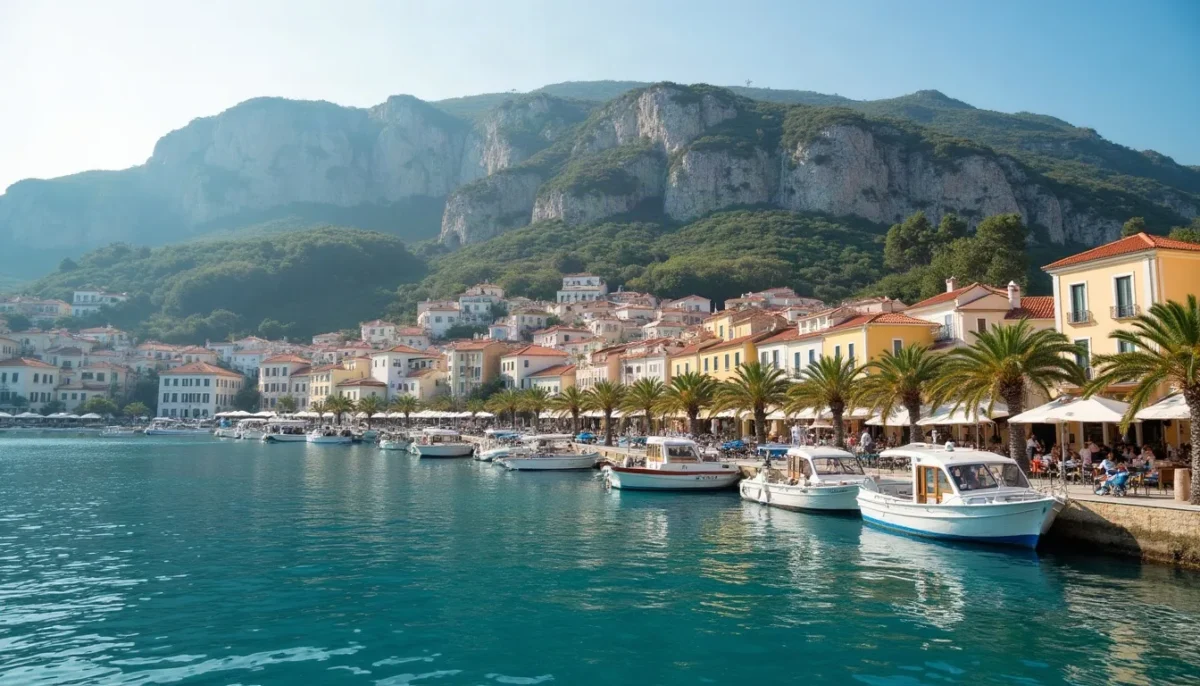
    Most visitors arrive in Samos through Vathy, the island capital that sits at the head of a narrow, deep-water bay on the north coast. Many treat it only as a place to pass through on the way to the beaches. That is a pity, because within a few kilometres the town holds one of the most important archaeological collections in the Aegean, a wine heritage that goes back to the 19th century and a hillside old quarter that still feels lived in. This walk links them together into one unhurried day.

    How Vathy became the heart of the island

    The modern story of the town begins in 1834, when Samos became an autonomous principality under Ottoman suzerainty. It was governed by a Christian prince appointed by the Ottoman government, assisted by a senate of four members from the island’s four regions: Vathy, Chora, Marathokampos and Karlovassi. The capital was later transferred to Vathy, which also became the main port of the island.

    Self-government lasted until the Balkan Wars. In 1912 the Samian politician Themistoklis Sofoulis took control of the island with a small group of Greek volunteers, and Samos was incorporated into Greece in 1913. Keep that timeline in mind as you walk, because two of the stops below, the first museum building and the town park, date from the final years of the principality.

    The Archaeological Museum: the kouros and the Heraion treasures

    Start early at the Archaeological Museum of Vathy, which keeps finds mainly from the sanctuary of Hera. It occupies two buildings. The older one, the Paschaleion, was funded by the businessman Alexandros Paschalis: its foundation stone was laid in August 1909 and it was ready in 1913. The newer building, which holds the sculpture collection, was inaugurated in June 1987.

    The star is the colossal kouros of Samos, carved from local marble around 580 BC and standing 4.75 metres high. Close by are the Hera of Cheramyes, dated to 570 BC, and the group of Geneleos, dedicated to Hera according to its inscription (560-550 BC). In the old building, look for the bronze griffins that once adorned the rims of huge cauldrons, ivory offerings such as a youth caught mid-leap in a dance and a relief of Perseus slaying Medusa, as well as wooden statuettes and ship models from the 7th and 6th centuries BC, a collection the museum describes as unique in Greece.

    Pythagoras Square and the Public Park

    From the museum, stroll back towards the waterfront. Pythagoras Square, often called the square with the lion, is the natural meeting point of the town, and the Samos Public Park, created in 1898, offers shade before the climb that follows. If you want a fuller list of cafés, beaches and practical tips for the town itself, this visitor guide to Vathy Samos is a useful companion to the heritage stops described here.

    Ano Vathy: the old town on the hill

    Above the harbour lies Ano Vathy, the traditional hamlet that grew up on the slope. It is best explored on foot, through narrow alleys lined with picturesque houses, many of them with renovated façades. Look out for the Ai Giannakis theatre and for the old wine cooperative building, where the primary school stands today, a reminder of how closely the neighbourhood was tied to wine. The hamlet is about 2 kilometres from Malagari, so it pairs naturally with the next stop.

    Malagari and the Samos Wine Museum

    On the edge of the bay, the Malagari district is lined with large stone warehouses built in the 19th century for the storage and trade of wine. One of them, which worked as a wine warehouse and later as a cooperage, was converted into the Samos Wine Museum in 2005. Inside you will find enormous wooden vats from the last century, stone grape-stomping vats known as lenos, old winemaking machinery, cooperage tools, collectible bottles, historic photographs and production records.

    The museum is part of the winemaking facilities of the Union of Vinicultural Cooperatives of Samos, and visits can include a tasting of Samian wines. For the 2026 season the cooperative lists opening days from Tuesday to Sunday, and guided tours must be booked in advance.

    Beyond the capital: Pythagoreion and the Heraion

    If you have an afternoon to spare, the island’s UNESCO World Heritage Site lies on the south coast. Inscribed in 1992, Pythagoreion and Heraion of Samos combine an ancient fortified port with Greek and Roman monuments and the sanctuary of Hera. The highlight is the tunnel of Eupalinos, dating from the 6th century BC, which runs 1,036 metres through the mountainside to bring water to the ancient city. The temple of Hera begun around 570-560 BC by Rhoecus and Theodorus was the earliest in the new Ionic order.

    Seeing the museum in the morning and the sanctuary in the afternoon lets you connect the finds with the place they came from. With car rental in Samos you can set your own pace between the north and south coasts instead of planning the day around fixed timetables.

    Planning the day

    • Begin at the Archaeological Museum and check the current opening days and tickets on the Ministry of Culture page before you go.
    • Walk up to Ano Vathy in the morning or late afternoon, when the lanes are cooler.
    • Leave Malagari for the early afternoon, while the Wine Museum is still open.
    • Keep Pythagoreion and the Heraion for a separate half day if you want to explore them without rushing.
    • Wear comfortable shoes: the old town is explored through narrow alleys, not wide streets.

    Vathy rewards visitors who slow down. In a single day you can move from the kouros of the Heraion to the lanes of Ano Vathy and the old wine warehouses of Malagari, and see why this harbour town became the capital of Samos.

    Sources

    • Hellenic Organization of Cultural Resources Development (ODAP), Vathy Archaeological Museum Samos. https://www.odap.gr/wp-content/uploads/demo_products/162_ARXAIOLOGIKO_MOYSEIO_BATHEOS_ENG.pdf
    • Hellenic Ministry of Culture and Sports, Archaeological Museum of Vathi in Samos. http://odysseus.culture.gr/h/1/eh155.jsp?obj_id=3311
    • UNESCO World Heritage Centre, Pythagoreion and Heraion of Samos. https://whc.unesco.org/en/list/595/
    • Greek News Agenda, The fascinating history of the island of Samos. https://www.greeknewsagenda.gr/the-fascinating-history-of-the-island-of-samos-2/
    • Union of Vinicultural Cooperatives of Samos, Winemaking facilities and Museum of Samos Wine. https://www.samoswine.gr/en/winemaking-facilities-museum-of-samos-wine/
    • Digital Wine Routes of Samos, Wine Route in the capital of Samos: Malagari, Samos Wine Museum, Traditional Hamlet of Ano Vathy. https://www.samoswineroutes.gr/en/3-wine-route-in-the-capital-of-samos-malagari-samos-wine-museum-traditional-hamlet-of-ano-vathy/
  • Hiring a Skipper in Greece: When It Makes Sense

    Hiring a Skipper in Greece: When It Makes Sense

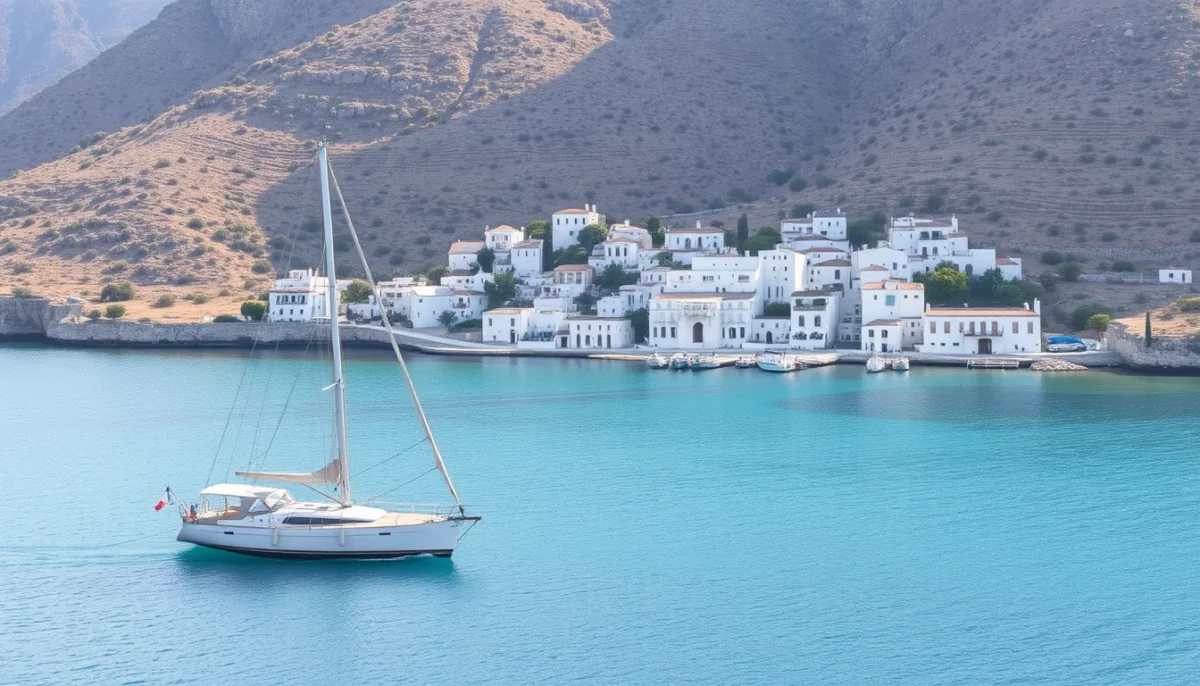
    Many people who dream of sailing the Greek islands stop at the same question: do I need to know how to sail? For a growing number of travellers the answer is a professional skipper. A skipper turns a yacht holiday from a test of seamanship into a relaxed week at sea, but it also changes how the trip is planned, paid for and lived on board. This guide looks at when hiring a skipper makes sense in Greece and what to expect once one joins your boat.

    Bareboat, skippered or crewed: the basic difference

    Yacht charters usually fall into three formats. In a bareboat charter the vessel is handed over without crew, and the charterer navigates and takes legal responsibility for the voyage. In a skippered charter the yacht comes with a professional skipper or captain who is responsible for manoeuvring the boat. In a crewed charter there is a full crew, typically a captain, a chef, a deckhand and a hostess, and this format is most common on motor yachts and larger catamarans.

    The skippered option sits in the middle. You keep the privacy and flexibility of your own yacht, while someone qualified handles the helm, the mooring and the daily decisions about weather and routes.

    The licence question in Greece

    Greek rules are the main reason many groups choose a skipper. For a bareboat charter, the person in command must hold an accepted qualification, such as the International Certificate of Competence (ICC), RYA Coastal Skipper or higher, or ASA 104. Charter companies note that the RYA Day Skipper has not been accepted by Greek port authorities since March 2019. On top of this, at least one second experienced adult crew member must appear on the crew list to assist with manoeuvres and mooring.

    Charter companies also ask for the original licence card rather than a photocopy, a sailing résumé and a completed crew list before departure. If nobody in your group holds a recognised licence, or if only one person does and nobody can act as a competent second hand, hiring a professional skipper removes the requirement altogether.

    Weather: the meltemi factor

    The second reason is the wind. The meltemi is the strong northerly that blows over the Aegean mainly in July and August, with occasional episodes from late May to October. In open water it typically reaches force 6 to 8 on the Beaufort scale, and seas of 2 to 4 metres are common in the passages between the central Aegean islands. Mountainous islands can also produce sudden gusts on their lee side.

    These conditions are manageable for experienced crews, but they can turn a short hop between the Cyclades into a demanding day. A local skipper knows which anchorages give shelter, when to leave early and when to stay in port. Sailing guides even suggest hiring a skipper at least for the first days if you are not used to meltemi conditions, or choosing calmer areas such as the Saronic Gulf.

    What a skipper does and does not do

    A skipper is responsible for the boat and for the safety of everyone on it. In practice that means planning the daily route with you, checking forecasts, handling the yacht in harbours and anchorages, and dealing with port formalities. Many guests also value the local knowledge: quiet bays, fishing villages and beaches that are hard to find in a guidebook.

    A skipper is usually not a chef or a housekeeper. On a skippered charter, meals, provisioning and cleaning are generally up to the guests, unless you book a crewed yacht with a cook and hostess. It helps to clarify this before departure, together with whether the skipper prefers to hear the group’s plans the evening before or to set the route according to the weather.

    If you want to try steering, raising sails or anchoring, say so. Many skippers are happy to teach, which makes a skippered yacht charter in Greece a good first step for people who hope to charter bareboat in later years.

    Budgeting for a skipper

    The skipper is an extra line in the budget. One European charter company quotes skipper fees in the region of 190 to 280 euros per day depending on the season, plus food. On most yachts the skipper also occupies a cabin, which reduces the number of berths available to guests, so a boat that sleeps eight might comfortably take six or seven guests plus the skipper.

    Remember that the advertised charter rate is rarely the full cost. Fuel, marina fees, provisioning and optional extras are usually charged separately, and on crewed yachts there is often an advance provisioning allowance (APA) and a crew gratuity on top. Ask for a written quotation that lists what is included, so you can compare offers fairly.

    Choosing the right area and boat

    Greece offers several sailing regions, each with a different character. The Ionian and the Saronic Gulf are generally more sheltered and have short distances between harbours. The Cyclades are iconic but more exposed to the meltemi. The Dodecanese and the Sporades offer quieter routes and greener landscapes. A skipper can help match the region to your group’s experience and the season.

    Boat choice matters too. Catamarans offer stability and space, which suits families and groups who prefer comfort at anchor. Motor yachts cover longer distances quickly and are useful when time is short. When comparing skippered yacht charters in the Greek islands, check the number of guests the yacht is rated for, the cabin layout including the skipper’s berth, and exactly what equipment and safety gear come with the boat.

    Is a skipper right for you?

    Hiring a skipper makes the most sense if nobody in your group holds a licence accepted in Greece, if you are sailing in July or August in the Aegean, or if you simply want to spend the week swimming and exploring rather than navigating. Experienced sailors with the right paperwork and a capable second crew member may prefer the freedom of bareboat. Either way, the key is to plan early, confirm the licence rules with the charter operator and agree on what is included before you step on board.

    Sources

    • Filovent, Boat licenses and boating in Greece: what you need to know before renting. https://www.filovent.com/us/faq/destinations/greece/boat-license-regulations-greece
    • Sail Connections, What sailing qualifications are required for a bareboat charter in Greece? https://www.sailconnections.com/faq/what-sailing-qualifications-are-required-for-a-bareboat-charter-in-greece/
    • Dream Yacht Charter, Mastering the Meltemi for Exhilarating Aegean Sailing in Greece. https://www.dreamyachtcharter.com/blog/mastering-the-meltemi-for-exhilarating-aegean-sailing-in-greece/
    • Wikipedia, Yacht charter. https://en.wikipedia.org/wiki/Yacht_charter